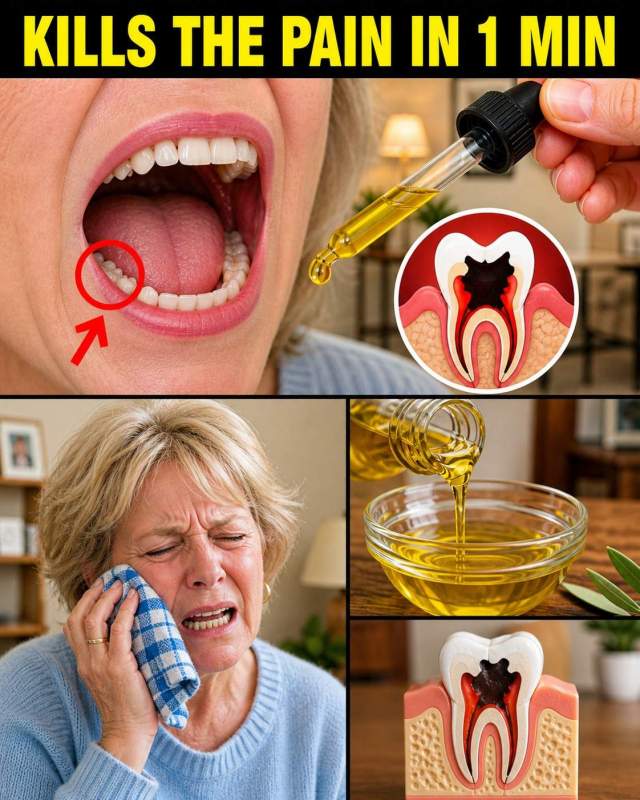
Clove oil, warm salt water, and a few other kitchen fixes don’t just “soothe” a toothache — they hit the pain pathway from different angles, like slamming doors on a room full of screaming alarms. That sharp, pulsing jab in the jaw, the hot-cold sting when you sip tea, the ache that makes one side of your face feel too heavy to carry — that’s the exact problem this post is pointing at.
The mouth is unforgiving. One irritated nerve, one inflamed gum edge, one tiny pocket of trapped food, and suddenly your whole evening turns into a grim little countdown to the next throb.
And the strangest part? The thing most people reach for first is often the least useful. The real relief starts with a cleaner battlefield — and one of these fixes does that in a way almost nobody respects.
The saltwater rinse that scrubs the wound instead of feeding it
Warm salt water works because it pulls fluid out of swollen tissue and rinses away the grime trapped around the sore spot. Think of it like flushing a sticky drain line instead of pouring perfume into the sink and hoping the smell disappears.
That salty bite on the tongue, the warm wash moving around the tooth, the faint taste of metal and minerals — your mouth knows something is happening. The pressure eases because the tissue stops sitting in its own irritated fluid.
But that’s only the opening move. The deeper trick is what happens when the nerve itself gets less exposed, and that’s where the next fix turns from “helpful” to borderline sneaky.
Why clove oil hits the pain signal so hard
Clove oil carries eugenol, a compound that behaves like a local shutdown switch on irritated nerve endings. It doesn’t solve the root problem, but it slaps a lid on the screaming long enough for you to think straight again.
That sharp, medicinal smell — warm, woody, almost burning — is the smell of a compound that doesn’t play politely. Dabbed carefully, it lands like a tiny fire blanket over a spark that keeps flaring in the same place.
And this is where people get angry, because the relief feels almost too simple. No glossy packaging, no expensive bottle, no dramatic machine humming in the background — just a common kitchen extract doing a job the wellness industry would rather charge you four times for.
That’s not the whole story, though. Once the nerve quiets down, the real question becomes: what keeps the ache from roaring back the second you bite down?
Why swelling and pressure make everything worse at night
When your head lies flat, blood and fluid pool more easily around irritated tissue, and the tooth starts to throb like a drumbeat trapped inside bone. Elevating the head changes the pressure pattern, almost like propping open a swollen hose so it stops hammering itself apart.
You know that miserable moment when you finally get into bed and the tooth suddenly becomes the loudest thing in the room? The sheet is cool, the pillow is soft, and yet the pain feels louder because there’s nowhere for that pressure to go.
That’s why a cold compress on the cheek can feel so brutal and so effective at the same time. It narrows the local flow, dulls the pulse, and gives the nerve less fuel to keep the drama alive — but one common habit can erase that benefit before it even starts.
The cold compress that shuts down the throb
A wrapped ice pack on the outside of the face is like turning down the volume knob on a speaker that’s feeding back. It doesn’t “heal” the tooth, but it forces the surrounding tissue to stop broadcasting the pain so aggressively.
You feel the chill spread through the cheek skin first, then the deeper ache starts to lose its edge. The pulse becomes less violent, less insistent, less like something pounding from inside a locked drawer.
And yet the mouth itself still matters more than the cheek ever will. If food debris, plaque, or irritation keeps sitting there like wet leaves clogging a gutter, the pain keeps getting re-lit from the inside.
The cleanup step that stops the flare from feeding itself
Soft floss and careful brushing remove the tiny scraps that keep stabbing the gum line and feeding inflammation. It’s the dental version of clearing broken glass off a floor before someone keeps stepping on it barefoot.
That gritty feeling between teeth, the rough edge along the gum, the tiny sting when bristles pass over a sore spot — those are clues that the area is still being mechanically irritated. Clean it well, and the mouth finally gets a chance to stop defending itself.
Why didn’t anyone make this plain sooner? Because the cheapest fixes are the least glamorous ones, and the health machine loves expensive complexity more than a kitchen remedy that costs pennies.
But the mouth is only one piece of the puzzle. Once the surface irritation settles, the next layer is about whether you’re feeding the problem or starving it.
The foods and drinks that keep the nerve on a hair trigger
Very hot, very cold, sugary, and acidic foods can keep exposed tissue flinching like it’s being poked with a needle. Skip the extremes and the mouth stops getting ambushed every time you swallow.
Room-temperature water feels almost boring by comparison, but boring is exactly what a sore tooth wants. No shock, no sting, no sudden flare that makes your jaw clench and your eyes narrow.
That’s the relief people are really chasing: not a miracle, just a few quiet hours where chewing doesn’t feel like punishment. And the last detail matters more than most people realize — because the way you use these fixes can either calm the fire or pour on more fuel.
Clove oil, salt water, cold compresses, and careful cleaning all work best when you stop treating them like random tricks and start using them like a sequence that strips away pressure, grime, and nerve irritation one layer at a time. That’s why the person who just swishes once and quits often gets little relief, while the one who rinses, cools, and clears the area can feel the difference spread through the jaw.
There’s one preparation habit that ruins the whole thing: using clove oil straight from the bottle, full strength, on already raw tissue. It can hit like a hot chemical burn, turning a sore spot into a furious one, especially when the cotton swab comes away stained gold and the gum turns redder instead of calmer. The next topic is the pairing that makes this work better than clove oil alone — and it’s the part most people never connect to tooth pain.
This article is for informational purposes only and does not replace professional medical advice. Please consult your healthcare provider for personalized guidance.